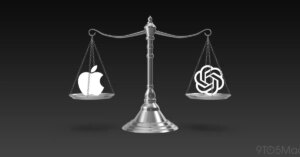
OpenAI and the other defendants in Apple’s trade secret misappropriation lawsuit have filed a new motion, asking the court to quash two expert statements and ignore other evidence recently submitted by Apple. Here are the details.
A little context
As regular readers of 9to5Mac probably know, Apple recently filed a trade secret theft lawsuit against OpenAI, Jony Ive’s io products, and two former employees: Chang Liu and Tang Tan.
Simply put, Apple accuses its former employees of taking or accessing sensitive hardware information after they left the company and using it to benefit OpenAI’s consumer hardware efforts.
Apple specifically alleged that Chang Liu accessed confidential technical files after leaving Apple, while alleging that Tang Tan sought confidential information from Apple employees interviewing for jobs.
As part of the lawsuit, Apple asked the court to issue a preliminary injunction preventing OpenAI and the other defendants from accessing, using, disclosing or soliciting Apple’s confidential information and trade secrets.
According to Apple, the injunction would prevent its trade secrets from being further integrated into OpenAI’s hardware development as the case unfolds.
Apple presents new evidence, OpenAI counters
As part of the legal debate over its motion for this preliminary injunction, Apple last week filed a response brief supported by five expert statements totaling 126 pages, along with 13 documents. The experts were Daniel Roffman, James Pooley, Dr. Ayman Fayed, Dr. Paul Hatch and Dr. Jude Runge.
In these documents, Apple argued that OpenAI’s opposition failed to undermine its trade secret claims and pointed to additional evidence that supports its allegations against Liu, Tan, OpenAI, and io Products.
The expert statements, meanwhile, addressed and delved into issues such as Apple’s security practices, the forensic evidence of Liu’s devices, the value of its energy management trade secrets, and the secrecy of its metal finishing processes, two key categories at issue in the lawsuit.
Now, OpenAI and the other defendants are responding, accusing Apple of improperly using its response brief to introduce new evidence and expert opinions, including material they say could have been submitted earlier, leaving the defendants without a fair opportunity to respond.
From the adventure:
Apple submitted five new expert statements (including one entirely new expert), totaling 126 pages, in its response brief, as well as numerous new documents. These statements go well beyond the scope of Apple’s opening brief and defendants’ opposition, and in any case do not save Apple’s deficient motion.
The defendants also examine the experts’ new statements in detail, arguing that Apple is actually trying to support its original motion with new material after seeing the defendants’ response.
Among other things, they allege that Runge was hired as an entirely new expert to bolster testimony that Apple had already presented and that Fayed offered new opinions that could have been included earlier.
They add that Pooley relied on an investigation conducted only after Apple filed its original motion, and that Roffman presented evidence that they say was available to Apple before that filing, while also presenting some of Liu’s communications out of context.
As a result, the defendants are asking the court to strike two of the new statements, including Roffman’s five testimonies, and to ignore other evidence and opinions that they say were improperly introduced.
Interestingly, they ask that if the court decides to consider Roffman’s statement and evidence anyway, it also consider a new statement filed by Liu, offering his explanation of the messages and device activity that Apple cited as evidence against him.
Below you can read the new OpenAI document. Apple’s documents from last week are available here.
It’s worth checking out on Amazon
FTC: We use automatic affiliate links that generate income. Moreover.