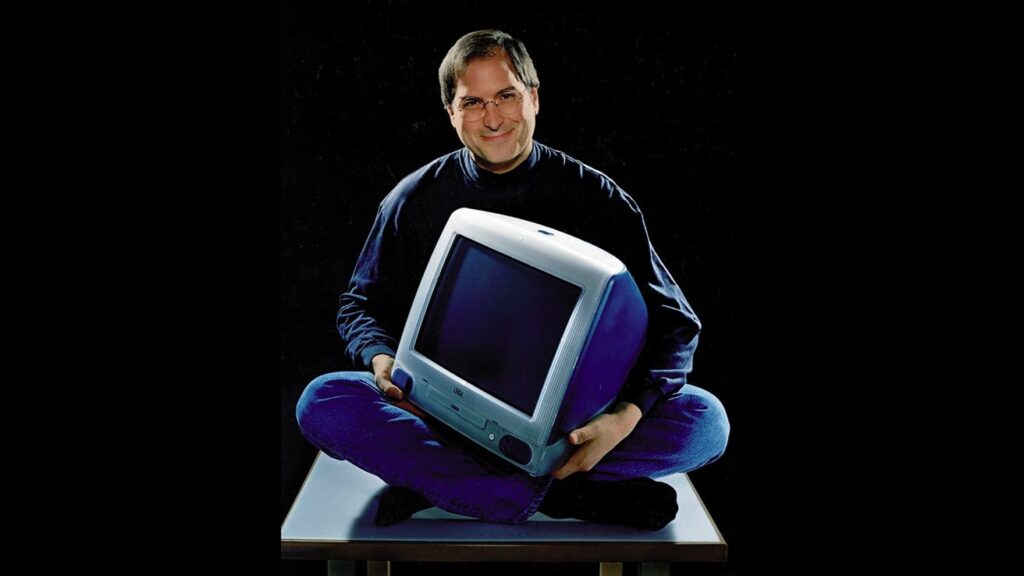
The late Apple CEO is still revered and missed. On the anniversary of Steve Jobs’ death, AppleInsider explores what the man himself thought about life and death.
Apple co-founder Steve Jobs died around 3:00 pm Pacific Time on Wednesday, October 5, 2011. He was at his home in Palo Alto. The Santa Clara County Public Health Department listed the immediate cause of death as respiratory arrest, but the underlying cause was a “metastatic neuroendocrine tumor of the pancreas.”
Flowers left outside Steve Jobs’ Palo Alto home
Later that day, his wife Laurene Powell Jobs released a statement.
Steve passed away peacefully today surrounded by his family.
In his public life, Steve was known as a visionary; in his private life, he loved his family. We are grateful to the many people who shared their wishes and prayers during the last year of Steve’s illness; A website will be created for those who want to offer gifts and memories.
We are grateful for the support and kindness of those who share our feelings for Steve. We know many of you will mourn with us and ask that you respect our privacy during our time of grief.
Jobs was 56 years old and had been undergoing treatment for this rare form of pancreatic cancer since he was 49. As a result, he was conscious of his health when he gave a keynote speech at Stanford University in 2005. He chose to talk about mortality.
By then, he had already undergone a successful operation to remove a tumor, but in 2009 he took an extended leave of absence from Apple to undergo further treatment. He underwent a liver transplant and at the Apple event in September 2009 he thanked his donor.
“I now have the liver of a person in his twenties who died in a car accident and was generous enough to donate his organs,” Jobs said. “I am alive thanks to their generosity.”
We now know that Jobs rejected Tim Cook’s offer of a liver transplant, but in this same speech he thanked Cook and others for how they “rose to the occasion.”
Cook would again take over while Jobs took another medical leave in January 2011.
Jobs’ last public appearance occurred on June 7, 2011, representing Apple, at a Cupertino County meeting where he spoke about plans to build Apple Park.
Just under three months later, on August 24, 2011, Jobs formally resigned as CEO of Apple. On his last day, he reportedly chaired a board meeting, tried to fool a pre-release version of Siri with questions, and then went home with Apple lawyer George Riley.
That evening he told biographer Walter Isaacson that “I’ve had a very lucky career, a very lucky life. I’ve done everything I could do.”
The day he died
AppleInsider the editor at the time was Neil Hughes. That day he wrote Steve Jobs’ obituary for the site.
“I was at the gym and I got a lot of calls. The news broke late and I rushed home to cover it. For me it was a story: I wasn’t very emotional at the time, I was just in work mode, covering it when it needed to be covered,” he said. “From a news perspective, I knew it was going to happen, but it was still unexpected. It’s taken for granted that a guy like that will live forever.”
Journalists regularly write obituaries and you don’t put your personal reaction into these articles. Once the work is finished, however, things change.
“I never realized I was in a ‘relationship’ with Steve until later,” Hughes said. “There was a lawsuit involving emails between Eddy Cue and Steve. Something about iBooks. And Steve read one of my stories and learned something about his company from it. The truth is, Apple has always been paying attention, including Steve.”
Writer Bob LeVitus, whom Steve Jobs occasionally cited in keynote presentation slides, says that although his death was expected, it was upsetting. “I was really sad when he died. It was like the end of an era,” he recalls.
Bob “Dr Mac” Levitus
“He was one of those once-in-a-generation guys,” LeVitus said, speaking while Tim Cook was still CEO. “[Jobs] it was brilliant. Apple will never be the same after Steve. I think Tim Cook is really committed to keeping the spirit of Apple alive and the way Steve would have wanted it. [However] as the company gets bigger and bigger, it becomes more and more difficult to stay faithful to doing everything excellently.”
“I don’t know what the next big thing is, but I don’t know if Apple can do it without Steve,” LeVitus continues. “Maybe. There are so many smart people at Apple that I’m sure something good will come of it, but Steve was the one who said: Let’s build an MP3 player for real people who aren’t geeks. And let’s build a phone that’s really smart.”
Inheritance
When news of Jobs’ death spread, friends, colleagues and former rivals spoke about him. Microsoft founder Bill Gates said: “The world rarely sees someone who had the profound impact that Steve had, the effects of which will be felt for many generations to come. For those of us who were fortunate enough to work with him, it was an incredibly great honor. I will miss Steve immensely.”
On October 19, 2011, Apple held a memorial ceremony for Jobs. It was initially a private event for employees and live-streamed only at Apple Stores worldwide. About a week later, Apple released the video publicly. That video is no longer available on Apple’s site, but a commemorative page is. You can read a selection of people’s memories of Steve Jobs and still contribute your own.
Apple continues to maintain that page, and every year Tim Cook pays tribute to Jobs on the anniversary of his death, with tweets like this one in 2025:
Writing in 2021, former Apple chief designer Jony Ive says it was a “brutal and heartbreaking day” when Jobs died.
“After he died, I went out into the garden,” Ive wrote. I remember the sound of the lock on the wooden door as I gently closed it. I sat in the garden and thought about how talking often gets in the way of listening and thinking.”
“Maybe that’s why so much of our time together was spent in silence,” he continued. “I miss Steve desperately and will always miss not talking to him.”
Memorializing Steve Jobs
In 2022, I joined Jobs’ widow Laurene Powell Jobs and Tim Cook to launch the Steve Jobs Online Archive.
“Steve possessed a boundless sense of possibility and a faith in the power of individuals to make lasting contributions to humanity,” Powell Jobs said at the time. “My hope is that the Archive will be a place to draw inspiration from Steve’s life and work, inspiring new generations to make their own contributions to our shared future.”
Since then, the archive has released “Make Something Wonderful,” a collection of Steve Jobs’ emails and conversations.
In February 2025, he also celebrated the 70th anniversary of Jobs’ birth by posting a short video of an internal Apple meeting. In it, Jobs was asked how Apple would maintain its culture now that the iPhone was becoming a gigantic success.
“[One] One of the ways I think people express their appreciation to the rest of humanity is to create something wonderful and put it out there,” Jobs responded. “And you never meet the people, you never shake their hands, you never hear their story or tell your own, but somehow, in the act of creating something with great care and love, something is passed on there.”