ⓘ Vaidyanathan Subhramaniam, Notebookcheck
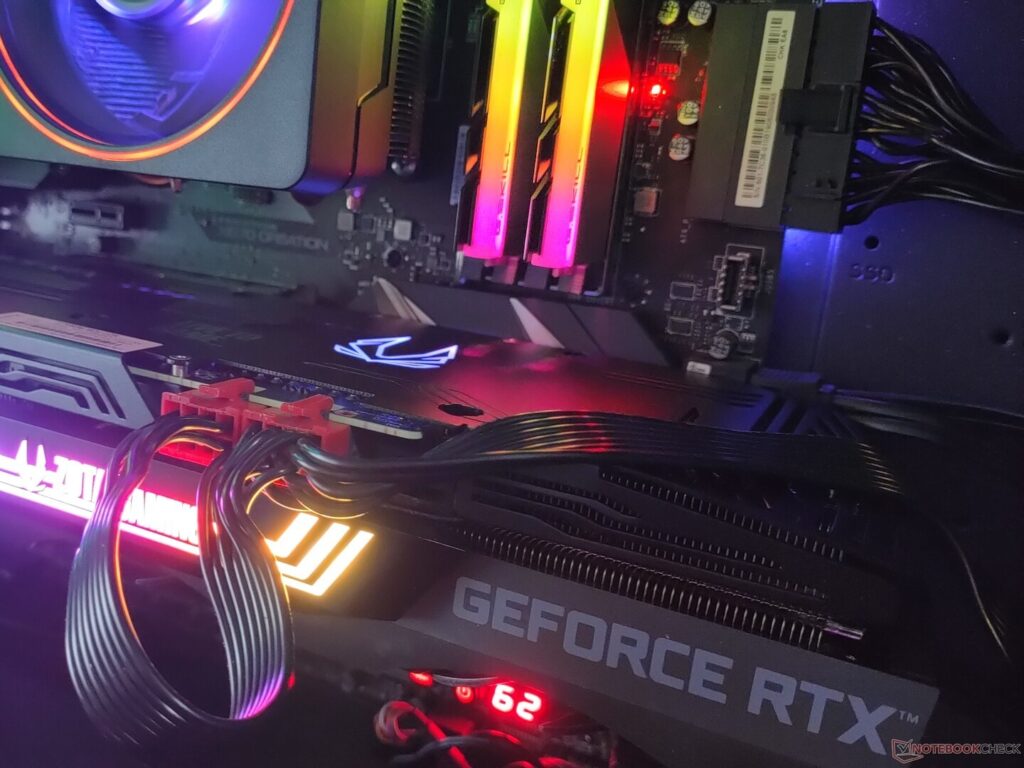
Nvidia’s six-year-old GeForce RTX 3090 apparently has untapped computing potential. A new open source project called gpu-unlock, developed by GitHub user Zagitta, can reportedly deliver double-digit improvements in some Tensor Core workloads without requiring hardware changes or a patched Nvidia driver.
The project aims to limit the instruction firing rate that impacts Tensor Core FP16 and BF16 operations with FP32 accumulation on Ampere-based GeForce cards. According to the developer, the affected operations can be performed at approximately half the speed available on professional Nvidia GPUs. Unlocking modifies the hardware’s speed selection registers to remove this restriction.
Interestingly, the technique builds on previous research used to unlock features on Nvidia CMP mining GPUs. Zagitta’s implementation uses a Linux kernel module that runs before Nvidia’s graphics driver loads, modifies the relevant registers, and resets the GPU before returning control to the unmodified driver. As a result, there is no need to permanently flash the card’s VBIOS or modified firmware.
In a community compatibility report, an RTX 3090 achieved 129.6 TFLOPS in BF16 matrix multiplication, compared to 77.5 TFLOPS. TF32 performance increased from 40.2 to 69.8 TFLOPS. Its sibling, the RTX 3090 Ti, saw the BF16’s throughput jump from 87.5 to 157.4 TFLOPS.
That said, earnings are very dependent on workload. Another RTX 3090 user reported a 16% improvement in processing long-context prompts during local LLM inference, while token generation speeds remained virtually unchanged. Separately, ComfyUI tests on an RTX 3090 Ti demonstrated approximately 47-59% higher throughput on several BF16-heavy image generation workloads.
But what about games? Nvidia’s DLSS technology also uses Tensor Core, raising the possibility that some AI-assisted rendering operations could take advantage of it. Unfortunately, no independently verified gaming benchmarks have established FPS improvements. For now, the original project is limited to Linux, although a separate experimental port for Windows has demonstrated that an unlocked RTX 3090 successfully boots into Windows on a specific system.
Unlocking also remains experimental, so installing it on a primary gaming PC comes with risks. However, the ability to get substantially more computing performance out of older RTX 30-series hardware without purchasing a new GPU is intriguing if you’re feeling adventurous.
I have been an avid PC gamer since the age of 8. My passion for gaming eventually pushed me into general technology, and I got my first writing job at age 19. I have a degree in mechanical engineering and worked in manufacturing and a few other publications like Wccftech before joining Notebookcheck in November 2019. I cover a variety of topics including smartphones, gaming, and computer hardware.