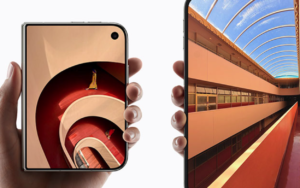
Foldable phones have existed for seven years, generated endless headlines, and still account for only a sliver of global smartphone sales. Apple’s entry into the category with the iPhone Duo is the moment multiple research firms have been waiting for — the point where a format stuck in early-adopter territory finally gets pulled into the mainstream. Whether that actually happens, and how fast, is now one of the most closely watched questions in the entire smartphone industry.
The Foldable Category Has Stayed Niche for Years — Here’s Why
Despite years of engineering investment from Samsung, Huawei, Google, Motorola, and others, foldables have only ever captured a single-digit percentage of the global smartphone market — commonly estimated at around 2 to 3 percent of total sales. The reasons are consistent across nearly every device in the category: weaker cameras than equivalent flagship phones, shorter battery life relative to their size and price, and the persistent visible crease running down the center of the display once unfolded. Those trade-offs have kept foldables firmly in early-adopter territory rather than pulling in mainstream buyers, even as the technology itself has steadily matured.
What’s Different About Apple’s Approach
Apple’s advantage isn’t that it invented anything foldables haven’t attempted before — it’s timing. Analysts have repeatedly pointed to Apple’s pattern of entering categories after competitors have absorbed the early, expensive mistakes, then benefiting from supply-chain maturity and manufacturing lessons rivals spent years learning the hard way. That’s the same playbook that let the original iPhone mainstream touchscreen technology in 2007, years after the underlying technology already existed elsewhere. With the iPhone Duo, Apple is betting that same pattern repeats: arrive later, but arrive with a more refined product than the market has seen so far.
The Numbers: How Big of an Impact Analysts Actually Expect
Multiple research firms have published aggressive projections tied directly to Apple’s entry. Counterpoint Research forecasts Apple could ship up to 6 million foldable iPhones in its first year, translating to somewhere between 25 and 28 percent of the global foldable market — enough to place Apple in the No. 2 position behind Samsung almost immediately, with Counterpoint projecting Apple could actually overtake Samsung’s share within a full second year of sales. IDC’s projections are similarly bullish, estimating Apple could capture over 22 percent of foldable unit shipments and as much as 34 percent of the category’s total value in its debut year, given an expected average selling price around $2,400. Both firms project the overall foldable market will grow between 20 and 30 percent year-over-year in 2026, substantially outperforming the broader smartphone market, which is expected to see shipments decline slightly over the same period.
Apple’s Second-Mover Advantage
Not every analyst frames Apple’s later entry as a disadvantage. Ming-Chi Kuo, the TF International Securities analyst closely tracking Apple’s supply chain, has argued that Android foldables still haven’t achieved mainstream adoption even in the premium segment, meaning the category itself remains under-penetrated rather than already claimed. From that view, Apple isn’t late to a mature market — it’s entering a market that’s still waiting for its actual mainstream moment, giving Apple room to define what “normal” looks like in the category rather than simply competing for share within an already-established format.
What Consumers Actually Want From a Foldable
Consumer research conducted ahead of Apple’s launch offers a useful reality check on what’s actually driving interest. A study by SmartTech Research, conducted in May 2026 among hundreds of qualified respondents, found the appeal of foldables comes down to a simple value proposition rather than an abstract vision of the future of computing: a bigger screen when you want one, and a pocketable phone when you don’t. Entertainment was the most commonly cited use case, selected by just over half of respondents, followed closely by multitasking between apps and reading news, books, or documents. That data suggests Apple’s marketing and product design decisions — including the iPhone Duo’s media-friendly proportions — are aimed squarely at how people already say they want to use a foldable, rather than trying to convince them of an entirely new way to use a phone.
The Passport Shape: A Deliberate Bet on Media Consumption
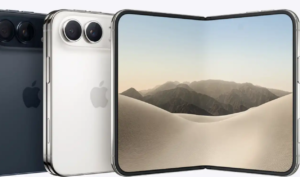
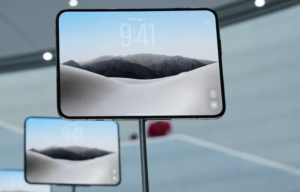
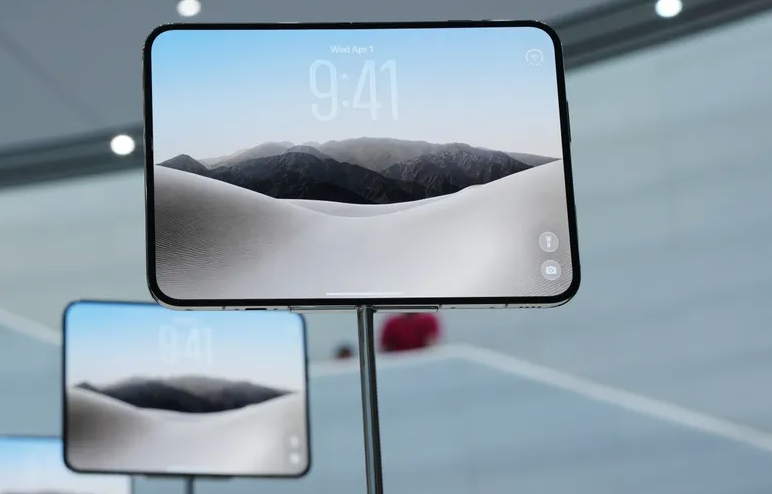
Apple’s decision to use a wider “passport” style foldable design, rather than the taller, narrower book-style format Samsung has favored, appears to be a deliberate response to that consumer research. The wider aspect ratio sits closer to the native proportions of most video content, reducing the black bars that appear on taller, book-style foldables when watching movies or shows. It’s a notable divergence from the rest of the industry — Google abandoned a similar wide-format design after 2023, while Samsung has stuck with the taller book-style format across its main foldable lineup. Apple betting on the opposite shape suggests the company sees media consumption, not productivity, as the more mainstream-friendly use case worth optimizing around.
How Rivals Are Already Reacting
Apple’s looming entry has visibly accelerated the rest of the industry’s own foldable roadmaps. Xiaomi reportedly timed the launch of its own Xiaomi 18 Fold in China to land just one day before Apple’s own event, in what analysts have described as an unlikely coincidence. Samsung, Huawei, and other major Android manufacturers are similarly speeding up new book-type foldable releases throughout the year, with Counterpoint specifically noting that competition is shifting toward book-type designs as Apple’s arrival approaches. That kind of pre-emptive repositioning from competitors is itself a signal of how seriously the rest of the industry is taking Apple’s ability to shift consumer attention and expectations across an entire product category.
The Price Barrier That Could Still Hold Things Back
None of this optimism erases the most obvious obstacle: price. With an expected average selling price around $2,400 and the iPhone Duo itself starting at $1,999, Apple’s foldable sits well outside impulse-purchase territory for most smartphone buyers, even those otherwise loyal to the brand. Analysts covering the category have consistently flagged pricing as the most durable constraint on foldable adoption, regardless of how much the underlying hardware improves. Apple’s ecosystem advantages — deep integration with existing Apple devices, services, and accessories like the Apple Pencil — give it a meaningful edge in justifying that price to existing iPhone owners, but they don’t eliminate the basic math facing anyone comparing a $1,999 starting price against a $1,199 standard iPhone 18 Pro.
Is “Mainstream” Actually the Right Word?
Given the scale of the projected growth, “mainstream” may still be a stretch to describe where foldables land even a year after Apple’s entry — a global smartphone market still measured in billions of annual units isn’t transformed by a category that, even after 20 to 30 percent growth, remains a low-single-digit share of total sales. What Apple’s entry more realistically accomplishes is normalizing the format: turning foldables from a niche experiment mostly discussed by tech enthusiasts into a widely recognized, credible product category that ordinary buyers actively consider, even if most still end up choosing a standard iPhone. Whether that shift eventually compounds into true mainstream adoption, the way it did for touchscreens after 2007, will depend heavily on whether Apple can bring the iPhone Duo’s price down in future generations the way it has with nearly every other product category it’s entered.