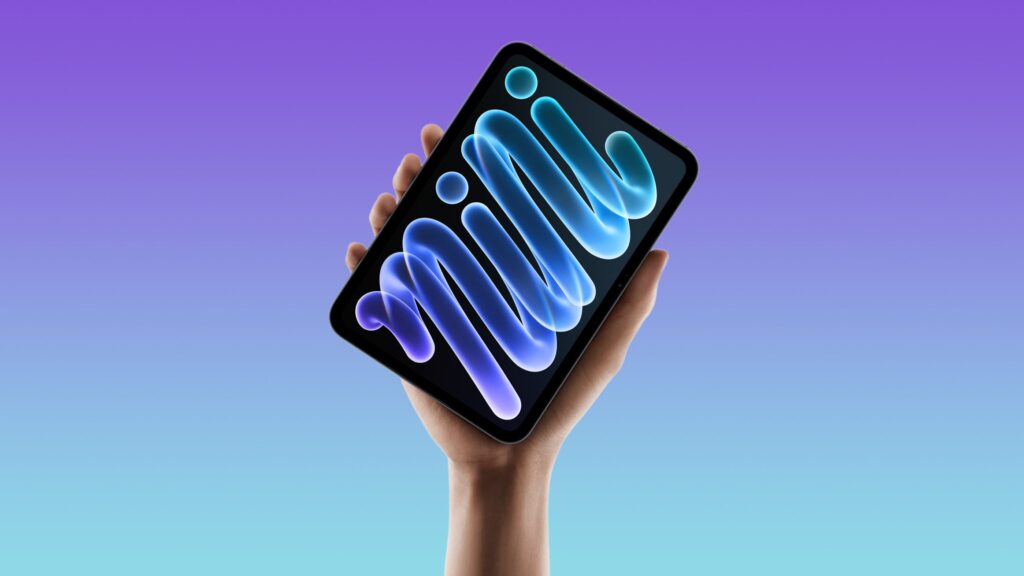
Although the new iPad mini has an OLED display, the device doesn’t support ProMotion, meaning the display’s refresh rate is limited to 60Hz rather than 120Hz.
ProMotion support would have allowed the iPad mini’s refresh rate to automatically adjust from 10Hz to 120Hz depending on the content being viewed, but Apple has evidently kept the feature exclusive to the iPad Pro across iPad models for now.
In an interview with YouTuber and podcaster Christopher Lawley, Apple’s vice president of hardware engineering, David Pakula, commented on the new iPad mini’s lack of 120Hz support, noting that its OLED display still has significantly faster pixel response times than the previous LCD model, resulting in reduced motion blur.
“The viewing experience is more than just a specification,” Pakula said. “One of the really cool things about OLED is that it has a really fast pixel response time. So it’s more than an order of magnitude faster than the pixel response time of an LCD display. And what that does is it makes everything really smooth. Motion blur is significantly reduced compared to LCD. If you couple that with the other things I mentioned, the contrast, the brightness and the color, this is just a great display.”
Apple says the new iPad mini can reach a maximum brightness of 600 nits for standard content, up from 500 nits on the previous model, and up to 1,200 nits for HDR content. OLED technology allows for higher contrast and more vivid colors, as there is no backlight and individual pixels turn off completely to display true black.
Apple’s technical specifications indicate that the new iPad mini has a contrast ratio of 2,000,000:1. The display still has 326 pixels per inch and P3 wide color support.
The new iPad mini is available for pre-order now, with US prices starting at $699, and the device launches on Friday, November 6.