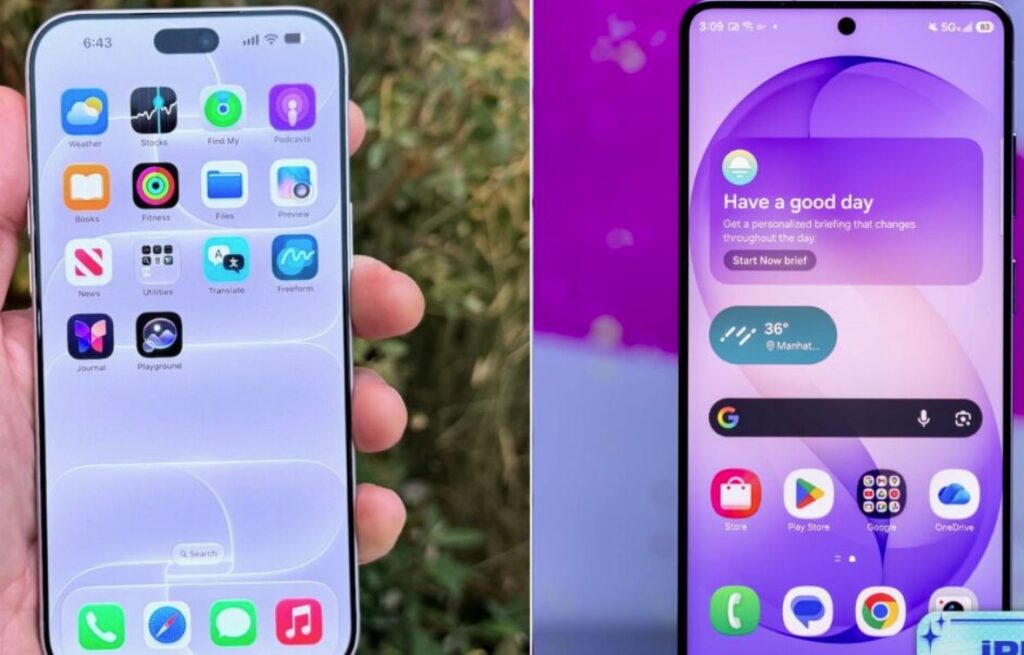
With Apple’s iPhone 18 Pro Max now shipping and Samsung’s Galaxy S26 Ultra several months into its own release cycle, the two biggest flagship phones on the market are once again facing off directly. Both cost roughly the same and both are aimed squarely at power users, but the two companies have taken noticeably different approaches to get there. Here’s how they actually compare, spec by spec.
Design and Build Quality
Apple’s iPhone 18 Pro Max moves away from titanium this generation, adopting a heat-forged 7000-series aluminum unibody specifically chosen for its dramatically improved heat dissipation compared to titanium construction. Samsung’s Galaxy S26 Ultra, meanwhile, keeps its familiar boxy Ultra silhouette, now protected by Corning Gorilla Armor 2 up front, and comes in noticeably lighter than its S24 Ultra predecessor at 214 grams. Samsung’s Ultra also retains a dedicated S Pen slot built into the chassis, a hardware feature Apple has no direct equivalent for on any iPhone.
Display Comparison
Samsung holds a clear size advantage here, with the Galaxy S26 Ultra’s 6.9-inch Dynamic AMOLED 2X panel outsizing the iPhone 18 Pro Max, while both phones run at a 120Hz refresh rate. Samsung’s Ultra also includes a built-in Privacy Display feature, a hardware-level screen technology that narrows the viewing angle to prevent people nearby from seeing your screen — something no iPhone currently offers. Apple counters with its Ceramic Shield 2 front glass and a smaller, more refined Dynamic Island capable of managing three simultaneous Live Activities.
Camera Systems: Four Lenses vs Three
This is where the two phones diverge most sharply in approach. The Galaxy S26 Ultra ships with four rear cameras: a 200-megapixel main sensor with an f/1.4 aperture, a 50-megapixel ultrawide with a 120-degree field of view, a 10-megapixel telephoto with 3x optical zoom, and a separate 50-megapixel periscope telephoto offering 5x optical zoom. The iPhone 18 Pro Max instead relies on three cameras built around a 48-megapixel Fusion Main camera featuring genuine variable aperture — a first for any iPhone — paired with ultrawide and telephoto lenses and Apple’s new Apple Reference Image authenticity feature. Samsung’s setup offers more total optical reach through its dual-telephoto arrangement, while Apple’s variable aperture gives photographers a level of manual exposure control Samsung’s fixed-aperture main sensor doesn’t match.
Performance: A20 Pro vs Snapdragon 8 Elite Gen 5
Apple’s A20 Pro chip is built on a 2-nanometer process, a full node ahead of the Galaxy S26 Ultra’s Snapdragon 8 Elite Gen 5 for Galaxy, which uses a 3-nanometer architecture. Early hands-on reviews of the iPhone 18 Pro Max have specifically praised its sustained performance under heavy workloads, crediting a redesigned vapor chamber with three times the surface area of the previous generation for allowing the chip to maintain peak speed far longer without throttling. Samsung’s chip is no slouch either, posting AnTuTu benchmark scores around 4 million and ranking among the fastest Android processors currently available, backed by its own redesigned vapor chamber that Samsung says improves thermal performance by 29 percent over its prior generation.
Battery Life and Charging Speed
The Galaxy S26 Ultra packs a 5,000mAh battery rated for around 31 hours of video playback, with 60W wired charging capable of reaching a full charge in roughly 45 to 48 minutes, alongside 15W wireless charging. Apple hasn’t published a direct battery capacity figure for the iPhone 18 Pro Max, but the company rates it for up to 45 hours of video playback on eSIM-only configurations, and independent battery testing from CNN Underscored found the iPhone 18 Pro Max actually outlasted the Galaxy S26 Ultra by roughly one hour and 45 minutes in head-to-head testing — enough to knock Samsung from its previous top spot in that publication’s rankings. Apple’s charging speed is faster on paper too, reaching 50 percent in around 15 minutes compared to Samsung’s roughly 22-to-24-minute pace to the same benchmark.
Software and AI: Siri AI vs Galaxy AI
Both phones are leaning heavily on AI as a core selling point this generation, but they’re taking it in different directions. Apple’s Siri AI, launched alongside iOS 27, is built around multi-step conversations, contextual awareness across a user’s apps, and the ability to act on requests directly — though it’s currently gated behind a waitlist for some users and carries daily usage caps on server-dependent features. Samsung’s Galaxy AI, running on Android 16 with One UI 8.5 (with One UI 9 now beginning to roll out), has had more time to mature and includes features like real-time call translation, generative photo editing, and cross-app AI assistance already deeply integrated across the Galaxy ecosystem.
Unique Features Each Phone Offers
Beyond specs, each phone has features with no real equivalent on the other side. Samsung’s Privacy Display and included S Pen give the Galaxy S26 Ultra genuine productivity and privacy advantages that Apple doesn’t attempt to replicate. Apple’s Apple Reference Image feature, which signs sensor data at the moment of capture to verify photo authenticity, has no direct Samsung counterpart, and Apple’s broader ecosystem integration with Mac, iPad, and Apple Watch remains a differentiator for anyone already invested in Apple hardware. Samsung, meanwhile, promises seven years of both OS updates and security patches, a considerably longer commitment than Apple has ever formally guaranteed for iPhone.
Price and Value Comparison
Pricing lands remarkably close between the two. The Galaxy S26 Ultra launched at $1,299 for its base 256GB configuration, identical to the iPhone 18 Pro Max’s own $1,299 starting price for the same storage tier. At the high end, Samsung offers a 1TB option with 16GB of RAM, while Apple’s top configuration scales all the way to 2TB. With pricing this evenly matched, the decision realistically comes down to ecosystem preference and which specific features — Samsung’s S Pen and Privacy Display, or Apple’s variable aperture camera and Siri AI — matter more for how you actually use your phone.
Which Phone Should You Actually Buy?
For anyone who values a stylus for note-taking and sketching, wants the added privacy of a narrowed viewing angle in public, or is looking for the longest possible software support commitment, the Galaxy S26 Ultra is the stronger pick. For buyers who prioritize best-in-class sustained performance, genuine manual camera control through variable aperture, and battery life that’s now testing ahead of Samsung’s own flagship, the iPhone 18 Pro Max holds a real edge this generation. Ecosystem lock-in remains the biggest deciding factor for most buyers in practice — but on pure hardware merit alone, this is one of the closest flagship match-ups either company has produced in years.