While a foldable iPhone presented a new challenge for Apple’s team of thermal engineers, they came up with a creative way to use the device’s hinge to their advantage. Here are the details.
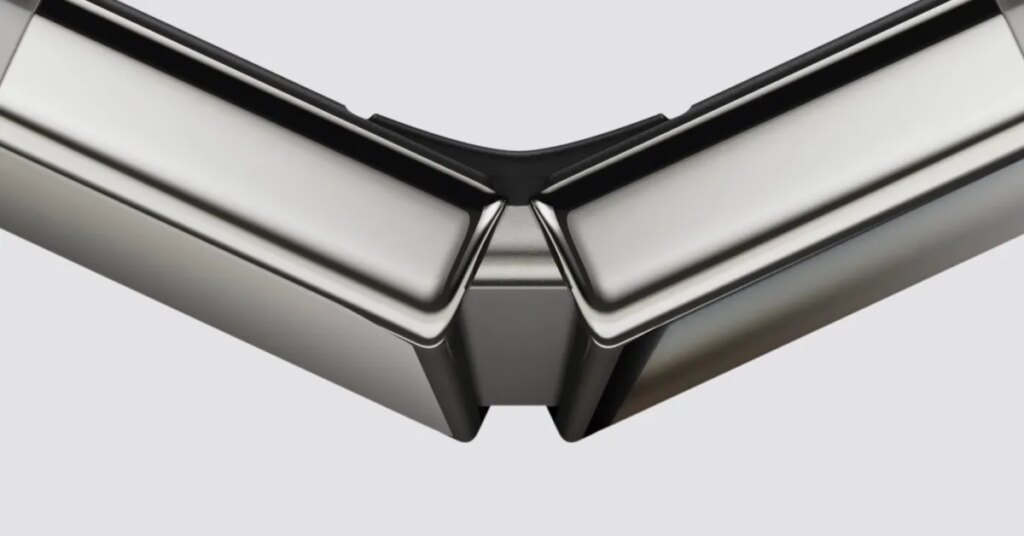
The iPhone Duo hinge features a flexible graphite tube
PCMag recently met with Dan Murray, Apple’s vice president of silicon engineering, and Banafsheh Barabadi, the company’s senior manager of thermal product design, to discuss the architecture of the A20 Pro chip.
The new SoC, which powers the iPhone 18 Pro, iPhone 18 Pro Max and iPhone Duo, is Apple’s first iPhone chip built on a 2nm manufacturing process, following the technology’s debut with the M6 chip in the Mac mini in August.
And while the A20 Pro was designed with all three new iPhones in mind, the iPhone Duo version packs in some additional features. These include a second display engine to run both displays simultaneously.
From PCMag:
The A20 Pro variant of the iPhone Duo is slightly different. “For iPhone Duo, we’ve added a second display engine to support simultaneous operation of the internal and external displays,” says Murray, “and with the improved performance of the CPU and GPU, we ensure we can deliver a seamless user experience across all displays. For the internal display, we’ve also added support for placing the FaceTime camera behind the display.”
The report offers a really interesting and in-depth look at the thermal characteristics of the A20 Pro and the new vapor chamber developed by Apple to keep them at bay. This includes what Apple calls “metal over foam,” a material that iFixit also examined during its recent iPhone 18 Pro teardown.
The second pillar is a new material that bridges the gap between the A20 Pro and the vapor chamber. “We call it metal on foam,” says Barabadi, and “it essentially creates a direct, mechanically compliant thermal coupling between the SoC and the vapor chamber. It is highly effective at removing heat, meeting the stringent mechanical requirements of the system. It took months of development to get the material properties exactly right to be able to use this material.”
Perhaps the most interesting news in the story is what Apple has done to improve the thermal performance of the iPhone Duo, especially considering the challenges of dissipating heat in a device that doubles in thickness when folded.
From the report:
“This was one of the most technically challenging aspects of our project,” says Barabadi. To overcome the problem, Apple ran a flexible graphite tube through the hinge itself to transfer heat between the two halves, thus increasing the surface area available for heat dissipation. “This part needs it[ed] to be co-engineered between our thermal team and mechanical team. It is a flexible material that must survive, as you might imagine, many zipper cycles while maintaining its thermal connectivity and also its structural integrity throughout the life cycle of the product.
PCMagMurray and Barabadi’s interview also delves into the A20 Pro’s architecture, including the benefits of placing the DRAM next to the processor rather than stacking it on top, and you can read it in full here.
It’s worth checking out on Amazon
FTC: We use automatic affiliate links that generate income. Moreover.