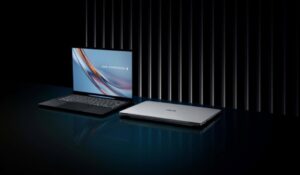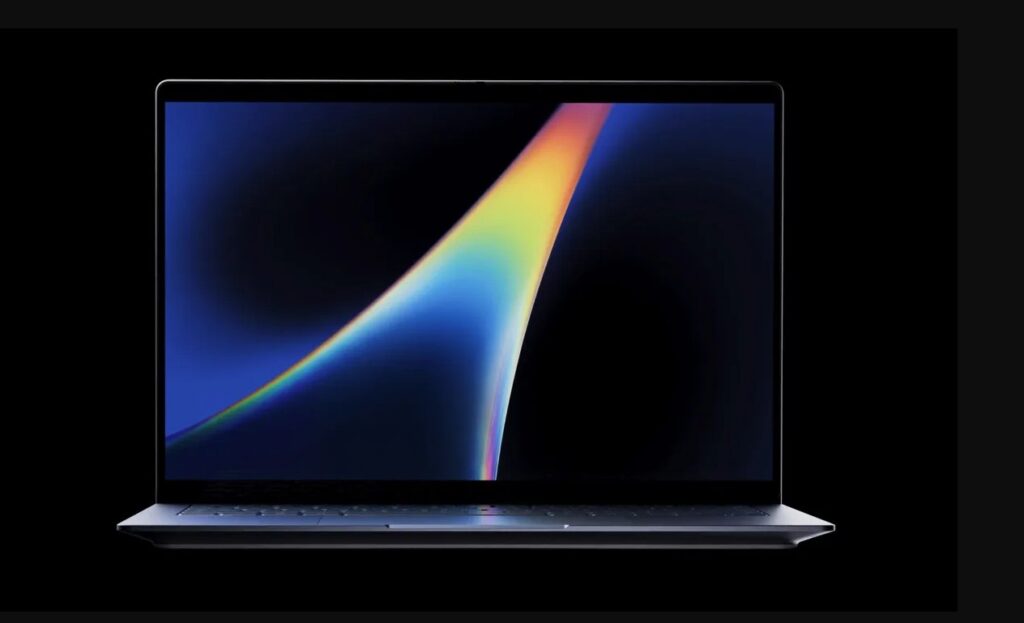
With Google’s brand-new Googlebook laptop category just days away from opening pre-orders, a fresh batch of leaked renders is giving the clearest look yet at ASUS’s entry into the lineup. Obtained by The Mac Observer, the images reveal a genuinely distinctive design, a surprisingly practical port selection, and internal cooling hardware that suggests ASUS is aiming higher than a typical lightweight Chromebook.
What Exactly Is a Googlebook?
Googlebook is Google’s newly announced premium laptop category, first unveiled back in May 2026 as a platform that blends Android-based technology with a familiar desktop computing feel. Rather than functioning as a simple Chromebook rebrand, Googlebooks are built around deep Gemini AI integration, including features like Magic Pointer for quickly accessing Gemini, Create My Widget, Cast My Apps, and Quick Access. Google has lined up five hardware partners for the category’s launch: Acer, ASUS, Dell, HP, and Lenovo, with pre-orders for the first wave of devices officially confirmed to open on September 21.
The Latest Leak: ASUS’s Most Detailed Look Yet
This newest leak, obtained directly by The Mac Observer just days before pre-orders begin, offers what’s being described as the most complete look yet at ASUS’s specific Googlebook model. The renders show the device from multiple angles, including close-up shots of the keyboard, trackpad, and side connectivity ports, following several earlier rounds of leaks that had already revealed pieces of the design throughout the summer.
Design: Ultra-Ceramic Chassis and a Dedicated Google Key
ASUS’s Googlebook is built around what the company calls an Ultra-Ceramic Light Alloy chassis, claimed to be 34 percent lighter and 13 percent stronger than materials used in ASUS’s previous laptop generations, with the finished device weighing in at under 1 kilogram. Every Googlebook across all five launch partners shares one unmistakable design signature: a colorful “Glowbar” light strip built into the outer lid. ASUS’s version pairs that shared branding element with its own distinctive touch — a unique, dedicated “G” key on the keyboard specifically for quick Gemini access, alongside a deep carbon gray finish with a matte texture on at least one leaked color option.
Ports and Connectivity: Built to Avoid Dongles
One of the more consistently praised details across multiple leaks is ASUS’s port selection. Side profile renders show a full-size HDMI output, two USB-C ports, one or two USB-A ports, and a 3.5mm headphone jack — a genuinely comprehensive connectivity lineup that stands in contrast to the increasingly dongle-dependent designs common across much of the modern laptop market. Wi-Fi 7 support rounds out the connectivity picture, positioning ASUS’s model as practical for plugging in existing peripherals and displays without needing a separate adapter for basic tasks.
Under the Hood: Panther Lake Silicon and Active Cooling
Leaked specifications point to ASUS equipping its Googlebook with Intel’s next-generation Core Ultra processors built on the Panther Lake architecture, featuring a neural processing unit capable of more than 47 TOPS for on-device AI tasks. Memory configurations reportedly scale up to 64GB of LPDDR5X RAM, paired with fast PCIe NVMe SSD storage. Notably, visual analysis of the leaked renders reveals a visible internal fan and heat pipe, indicating ASUS has built in active cooling rather than relying purely on passive heat dissipation — a detail that suggests this particular model may be aimed at handling heavier workloads than a typical Chromebook is built for, even though official processor confirmation is still pending.
Security Features Baked Into the Hardware
Beyond raw performance, the leaks point to a security-focused hardware package as well. ASUS’s Googlebook reportedly includes a physical camera privacy shutter, a dedicated Titan C2 security chip, and a built-in fingerprint reader for biometric login. That combination positions the device toward buyers who want hardware-level privacy assurances rather than relying purely on software-based security features — a meaningful consideration for anyone using the laptop for sensitive work or personal information.
How ASUS Compares to Other Googlebook Launch Partners
ASUS isn’t the only manufacturer bringing hardware to the Googlebook launch, and early leaks suggest each partner is carving out a slightly different niche within the shared platform. Lenovo’s entry is reportedly built around a 15.3-inch, 120Hz OLED display powered by an Intel Core Ultra 5 325, and the company appears to be preparing a 2-in-1 detachable tablet variant alongside its traditional clamshell model. Acer’s Googlebook is expected to feature a 14-inch OLED panel with a choice between the same Core Ultra 5 325 or a step-up Core Ultra 7 355 chip. Compared to those, ASUS’s emphasis on active cooling and its heavier RAM ceiling suggest a device positioned slightly more toward performance-conscious buyers within the broader Googlebook lineup.
A Word of Caution About the Leaked Images
Not every leak in this story has held up to equal scrutiny. An earlier batch of 14 ASUS Googlebook images that surfaced in August showed signs of having been run through AI upscaling, with garbled, illegible lettering visible on the keyboard in close-up shots — a detail that wasn’t clearly disclosed by the source at the time. That’s a useful reminder that not all leaked renders originate from the same source or carry the same reliability, and the most recent, more detailed leak obtained directly by The Mac Observer appears considerably more consistent and legible than some of the earlier rounds.
What’s Still Unknown Ahead of September 21
Despite months of increasingly detailed leaks, several key pieces of information remain unconfirmed. Pricing, final shipping dates, and whether ASUS’s specific Googlebook model will actually be among the devices available when pre-orders open on September 21 are all still unknown. With Google’s launch partners moving from leaked renders to what should soon be official product listings, those remaining questions are expected to be answered within days rather than weeks, as the Googlebook category makes its transition from rumor to retail reality.