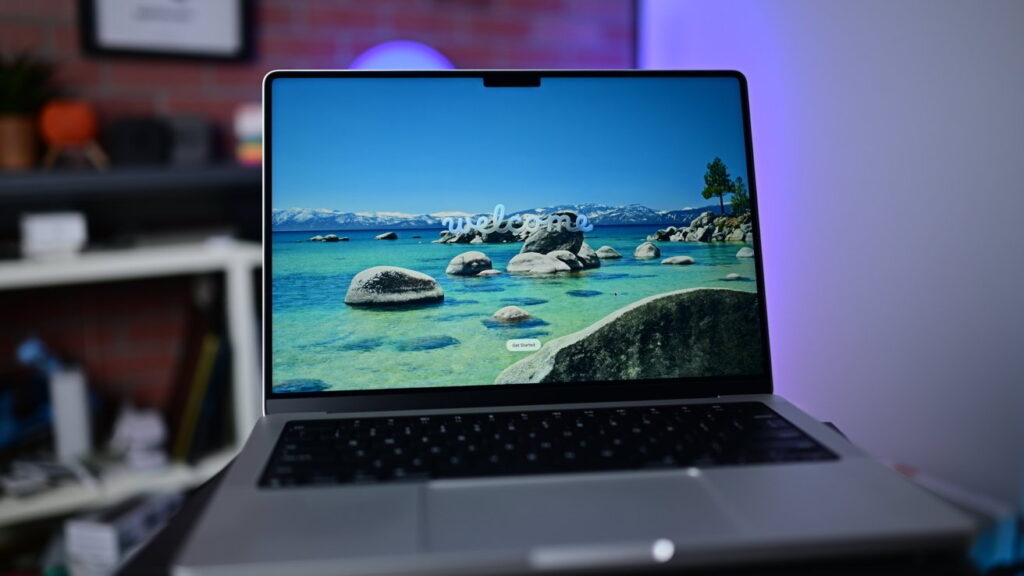
In this week’s Sunday Reboot, the touch-enabled MacBook Pro looms large, but for some reason the gap between Mac and iPad still exists.
Sunday Reboot is a weekly column covering some of the lighter stories in Apple’s reality-warping space from the past seven days. All to start next week with a good first step.
Touch-enabled MacBook? Cute…
In what’s definitely not an attempt to drive journalists, bloggers, and YouTubers crazy, Apple is apparently planning two events for October. Not content with the typical month-long gap between fall presentations, Apple has cut it to half a month.
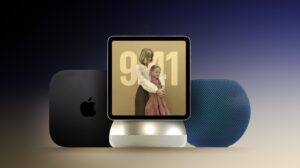
First, we’ll get smart home content, then, in late October, another that will introduce some new hardware for Mac and iPad.
To be honest, we should have been warned about the program’s shenanigans even before the new iPhones were introduced. The late August update to the Mac mini and Mac Studio was unexpected and put everyone on the back burner.
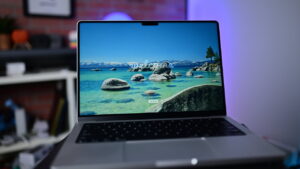
The new event at the end of October will be practically dominated by two things. One will be the iPad mini OLED, but the other will be the long-awaited MacBook Pro OLED.
Sure, the long-awaited might apply to the OLED bit, but in reality people will go crazy over the supposed inclusion of touchscreen support.
Tapping an iPad Pro on a Magic Keyboard feels great. It remains to be seen whether the MacBook Pro can do the same thing.
The tech industry has been waiting for Apple to do something touch-enabled for years. I remember years ago people were converting MacBooks into what were effectively touch-enabled iPad-like slates, because people wanted it.
In fact, you can try something similar if you have an iPad and a Mac running macOS Golden Gate. Sidecar for macOS 27 and iPadOS 27 supports touch input, meaning you can control your Mac with your finger, if you’re viewing your Mac via your iPad.
This is a great clue as to what to expect from the MacBook Pro gaining such voodoo powers. However, I wonder if it holds up properly.
I mean this in a very literal sense.
Touch-enabled notebooks have been around for a while, but there’s always the danger of a person touching the screen with their finger and causing their precariously balanced notebook to tip backwards.
Apple can’t add a Surface-style kickstand, as that would ruin the look of the MacBook Pro. Apple also won’t try to add weight to the base of a MacBook Pro to counteract this, since its goal is apparently to make everything lighter.
It may prove to be little or no problem for users who end up paying the inevitable nosebleed sums for the first OLED and touch-enabled MacBook Pro.
Magic to the touch
Adding touch to a MacBook Pro is a big deal, but it also means that anyone who wants to touch their data can do so without purchasing an iPad anymore.
However, for me, the iPad is already pretty much what I want a touch-enabled Mac to be. Heck, with the various productivity changes of the last few years, it’s almost at the same level.
There’s a menu bar, for Pete’s sake.
I’ve been using an 11-inch iPad Pro M2 and a Magic Keyboard as a notebook for a while now.
The two are rarely separated, except in those unusual situations where I want to cramp my hands writing notes or demonstrate my creative failures by drawing stick figures.
Apple really wants to keep iPad and Mac separate for some reason.
The Magic Keyboard also solves the whole display balance/tilt problem of touching the screen by shifting the weight of the iPad towards the user, but I digress.
We’re at a point where we have a lot of macOS in our iPadOS and parts of iPadOS in our macOS. Since almost everything is already there, surely Apple could take the final steps and make it an official thing.
Of course he won’t.
In June 2025, software manager Craig Federighi emphasized that iPadOS and macOS are kept as separate platforms because they are the best at what they do.
“The iPad is the best touch computer. And the Mac is the best keyboard and mouse computer,” Federighi insisted at the time. Hardware convergence does not mean that the software should be the same and that the iPad should not completely copy the desktop model.
Yet, we have a desktop that comes closest to the iPad model.
Of course, a year and a half has passed since Federighi said all this. Opinions could have changed in that time, to something that was a little more accepting of the ideas pollinating the platforms.
The iPad Pro and Magic Keyboard combined are essentially close enough to the Mac experience for me, as well as being able to run all my Mac apps or compile code in Xcode.
A touchscreen MacBook Pro could convince Apple to go the distance and actually bring macOS to the iPad. Or at least close the gap when it comes to some of the Mac-specific features that could really be used by power iPad users.
I will continue to hope that a sea change in the John Ternus era will finally allow Apple to give up the pretense that they need to be separate platforms with separate operating systems.
It’s a foolish thing to hope, but I can dream.
Last week’s Sunday Reboot talked about Apple Music reaching Albania and Apple Pay in India. Launches arrived in countries many years after the initial launch.